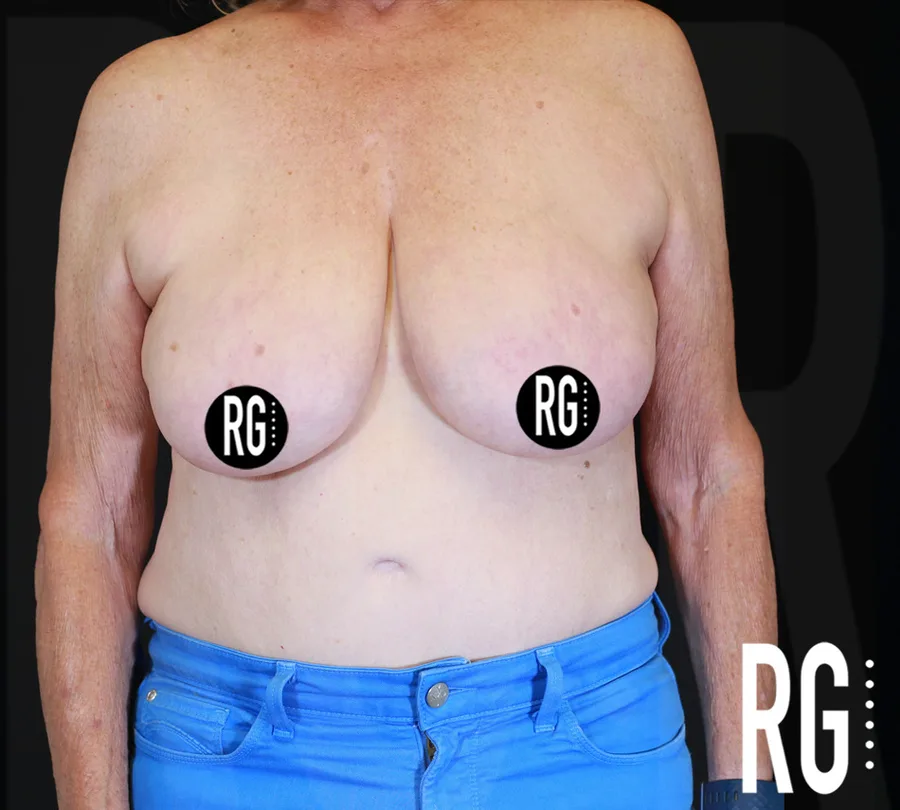
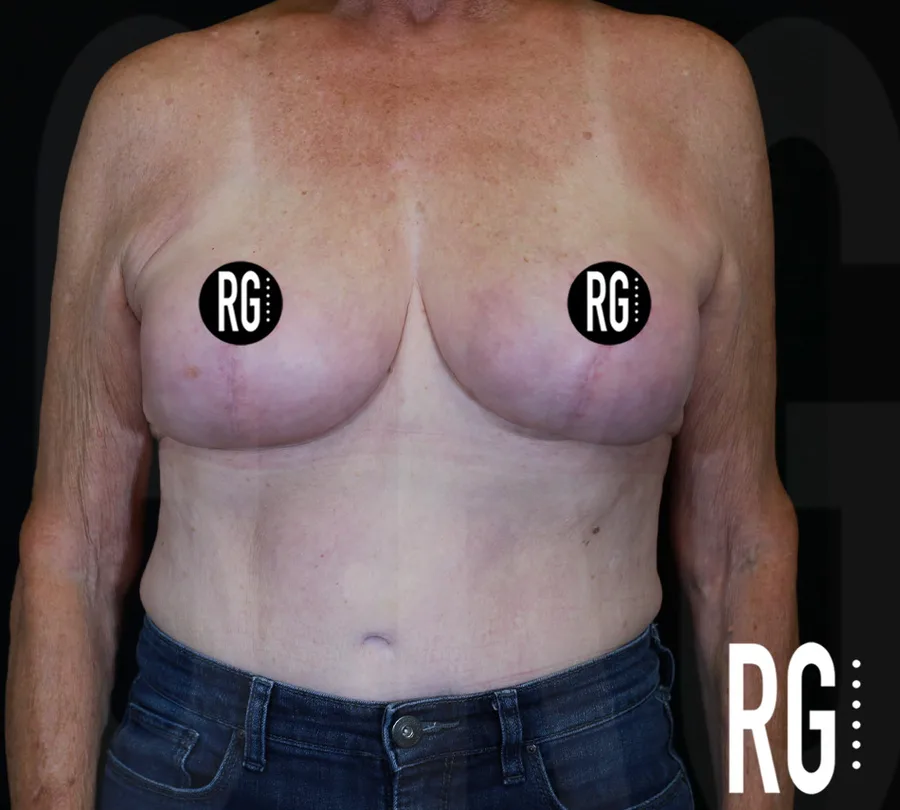
Breast reduction is not just about removing volume — it's about rebuilding a lighter breast with structure, position, and proportion. Every reduction at RG is also a lift, planned around your frame.

When breast size exceeds what the frame can comfortably carry, the body keeps score. These are the patterns we hear at consultation every week.
Chronic strain from weight the spine and shoulders were never meant to carry all day.
Deep, painful grooves where the straps carry the load all day.
Rashes and irritation beneath the breast fold, especially in warm months.
Running, gym work, even posture — large breasts change what feels possible.
Removing volume without rebuilding structure trades one problem for another. At RG, reduction reshapes the breast envelope, repositions the nipple to the ideal axis, and supports the lighter breast internally — the same structural thinking as our mastopexy.
How much to remove is planned relative to your frame, posture, and goals — not a generic target.
The breast mound is rebuilt and the nipple-areola complex moved to the ideal axis.
Pillar support carries the new breast so the skin doesn't bear the load alone.
Bra roll, "chicken nuggets," and lateral chest wall refined so the smaller breast belongs to a balanced torso.
A structural reduction doesn't read as "smaller breasts" — it reads as a body in proportion, usually with immediate relief patients describe as life-changing.
Support bra, walking the same day. Many patients notice strain relief almost immediately.
Back to desk work. Swelling and early scar formation are normal.
Contour improves; light exercise resumes.
Swelling resolves and the new shape settles.
Scars fade and flatten. Final result established.
Breast reduction can qualify for insurance coverage when functional criteria are met — however, our practice does not participate with insurance. All procedures at RG Aesthetic Plastic Surgery are performed on a self-pay basis, with financing available through Cherry and CareCredit.
Sensation changes are possible with any breast procedure. Techniques that preserve the nerve-bearing tissue pedicle protect sensation for most patients, though temporary changes in the first months are common and no outcome can be guaranteed.
Many patients can, because modern techniques keep the nipple connected to the underlying gland — but reduction does remove breast tissue, and no procedure can guarantee breastfeeding capacity. If future breastfeeding matters to you, raise it at consultation; it influences technique selection.
The goal is proportion, not a cup-size target. The amount removed is planned against your frame, tissue quality, and blood supply — enough for relief and balance while keeping a natural, well-vascularized breast.
Routinely, yes — in two ways. Liposuction refines the breast itself during reshaping, and framing liposculpting of the bra roll, axillary fat, and lateral chest wall completes the proportion. It's part of the operation, not an add-on.
Volume, position, symptoms, and proportion are evaluated together at consultation — with transparent self-pay pricing and financing options through Cherry and CareCredit.