Skin alone doesn't hold shape long term. At RG Aesthetic Plastic Surgery, mastopexy is built on internal pillar support — reshaping and suspending the breast tissue beneath the skin so the result has structural integrity, not just surface tension.

Lifts that fail early usually addressed only the skin. The skin relaxed — and the shape went with it. Understanding this is the single most important part of choosing a breast lift.
Ptosis happens because tissue has descended within an envelope that can no longer support it. Tightening the wrapper doesn't solve the structural failure underneath.
When skin carries the entire load, closure tension rises — and widened, more visible scars follow.
Skin stretches back. Skin-only lifts often drift toward the pre-operative shape within a few years.
Long-term shape depends on how the breast is supported internally — not on how tightly it's wrapped.
Toggle between a skin-only lift and the structural approach. The difference is where the support comes from.
The mastopexy approach at RG addresses the actual cause of ptosis — in four deliberate layers.
The breast tissue itself is repositioned and reshaped to create a more projecting, youthful mound — the shape is built in the tissue, not the skin.
The reshaped tissue is suspended internally — often described as an "internal bra" — creating a structural anchor the skin doesn't have to bear alone.
The skin envelope is re-draped over the newly supported breast under minimal tension. Less tension means finer scars and slower recurrence.
The bra roll, "chicken nuggets," and lateral chest wall are sculpted in the same operation — the frame defines how the lifted breast reads on your body.
A beautiful breast doesn't end at the breast. Dr. Ramirez Gavidia routinely combines liposculpting of the surrounding zones with breast surgery — because the frame defines how the result reads on your body.
This is routine at RG, not an upsell — sculpting the borders is how a lifted breast becomes a proportioned upper body.

Breast ptosis is classified by the position of the nipple relative to the breast fold. The grade determines the incision pattern — not preference, not trend.
Nipple sits at the level of the fold. Often correctable with a periareolar or short-scar vertical technique.
Nipple has descended below the fold but remains above the lower pole. A vertical "lollipop" mastopexy is typically indicated.
Nipple is at the lowest point of the breast. A full inverted-T (Wise pattern) mastopexy is required for optimal correction.
After pregnancy, breastfeeding, or significant weight change, ptosis and volume loss usually arrive together. A lift restores position — it cannot restore fullness that's gone. Augmentation-mastopexy addresses both in a single, carefully sequenced plan.
This is a technically demanding combination: the tension vectors of augmentation and lift work against each other, and the planning must account for it. In practice, most structural lifts at RG include implants — combined planning is our default lens, not an add-on.
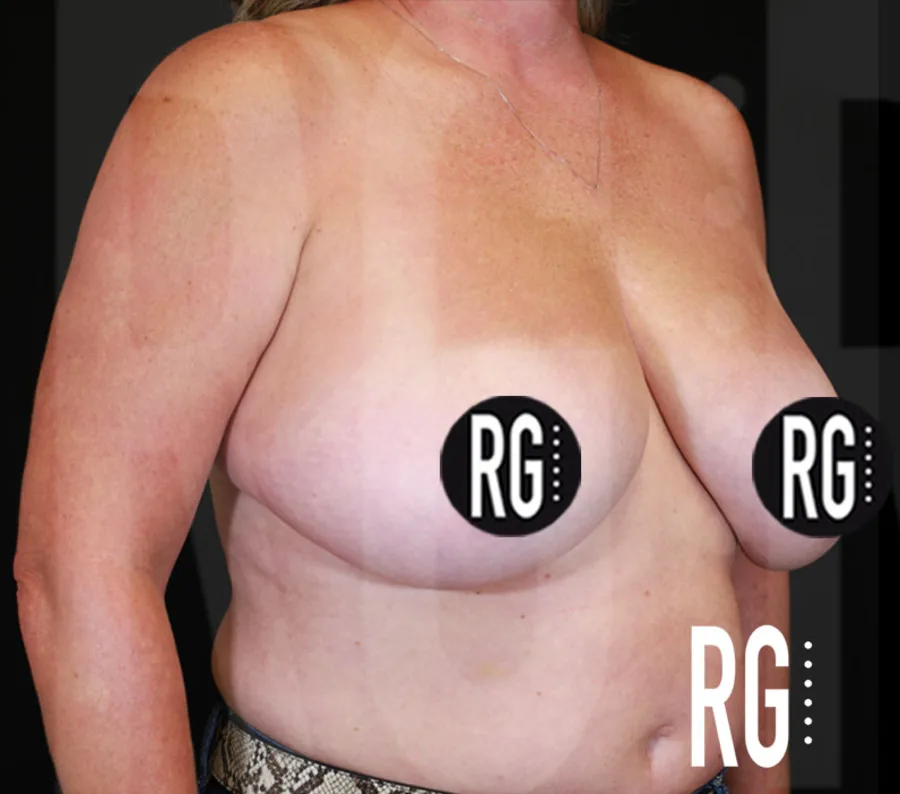
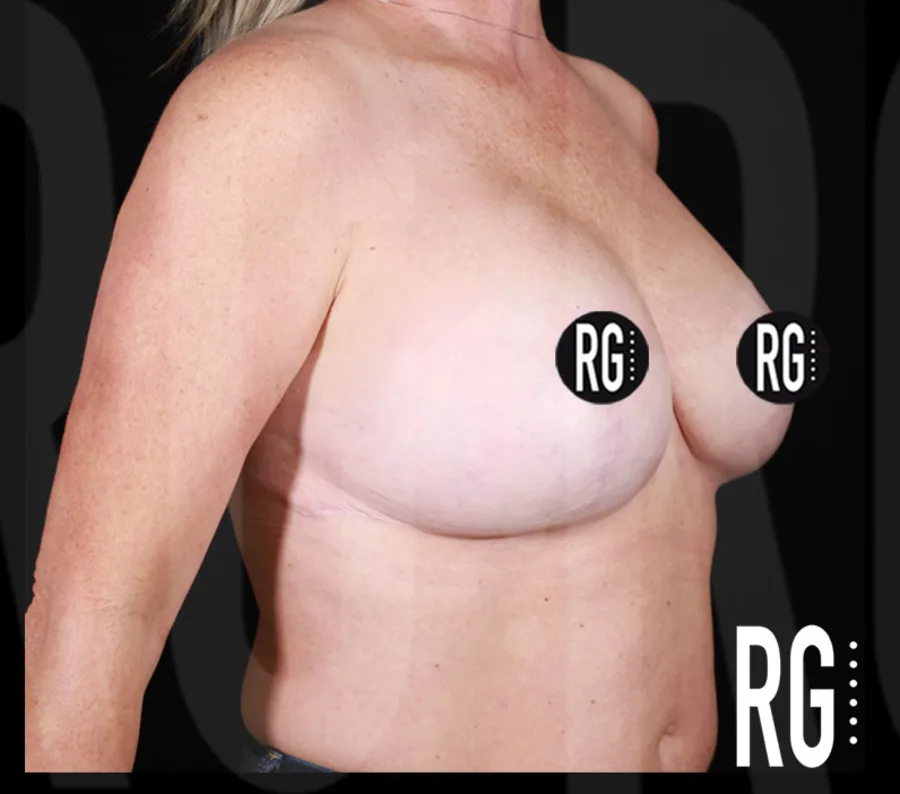
This patient had a structural breast lift with implants — internal bra support plus framing liposculpting of the lateral chest wall and axilla. At one year, the position is holding and the frame reads clean.
Why a breast lift should never depend on skin alone — the internal pillar support technique explained.
Dr. Ramirez Gavidia explains how internal pillar support elevates the breast, improves shape, and helps that shape hold its position over time.
Most patients are surprised by how manageable mastopexy recovery is — because internal support means the skin closure isn't under strain.
Rest in a surgical support bra. Up and walking the same day; discomfort managed with oral medication.
Most patients return to desk work. Swelling and early scar formation are normal.
Progressive improvement in contour. Scars begin to mature. Light exercise resumes.
The majority of swelling resolves and the shape settles in.
Scars fade and flatten. The final result is fully established.
All mastopexy procedures leave scars — ranging from around the areola only, to a vertical scar to the fold, to an inverted-T pattern. They are placed to be concealed within the bra line, and because internal support takes tension off the closure, they typically heal finer than skin-only lifts.
A structural lift is built to hold for many years because the support is internal, not skin-deep. Maintaining a stable weight, wearing supportive bras, and avoiding significant weight fluctuation all help preserve the outcome.
Yes — and for some patients a lift alone is the correct procedure. If your primary concern is position and shape rather than volume, an implant isn't necessary. Dr. RG will assess whether a lift alone, augmentation alone, or a combination fits your anatomy and goals.
Yes — augmentation-mastopexy is the most common configuration at RG. It's a technically demanding combination because the tension vectors work against each other, which is exactly why it's planned as one structure rather than two stacked procedures.
At RG, routinely yes. Sculpting the bra roll, the anterior axillary fat pockets ("chicken nuggets"), and the lateral chest wall is performed with breast surgery whenever it benefits the result — the frame around the breast is as important to the final shape as the lift itself.
Cosmetic breast lifts are not covered by insurance. Breast reduction, which also lifts the breast, may qualify when functional criteria are met. Financing is available through Cherry and CareCredit.
Position, volume, tissue quality, and support are evaluated together at consultation — so the recommendation is a lift, a lift with implants, or neither, based on your anatomy.